Hey there! I’m a supplier of PFC (Power Factor Correction) power supplies. You might be wondering how these power supplies are able to regulate the output voltage. Well, let’s dive right in and break it down in a way that’s easy to understand. PFC Power Supply
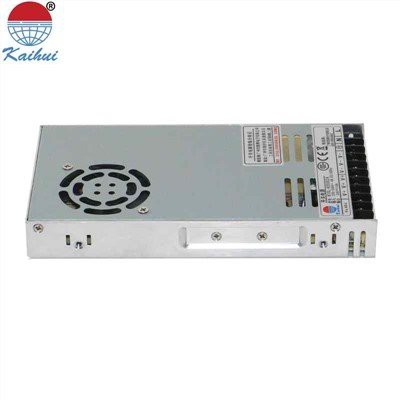
First off, let me give you a quick rundown on what a PFC power supply is. In simple terms, a PFC power supply is designed to improve the power factor, which is a measure of how effectively electrical power is being converted into useful work output. It helps to reduce the amount of reactive power and makes the power consumption more efficient. And a crucial function of any power supply, including PFC ones, is to provide a stable output voltage.
So, how does it regulate that output voltage? One of the key components in a PFC power supply is the control circuit. This little guy is like the brain of the operation. It continuously monitors the output voltage and then adjusts the internal components of the power supply to keep that voltage at the desired level.
Let’s start with the basic principle of voltage regulation. When the load on the power supply changes, it can cause fluctuations in the output voltage. For example, if you suddenly connect more devices to the power supply, the load increases, and without proper regulation, the output voltage would drop. On the other hand, if you disconnect some devices, the load decreases, and the output voltage could rise.
The control circuit in a PFC power supply uses a feedback mechanism to deal with these changes. It constantly compares the actual output voltage with a reference voltage. The reference voltage is like a target value that we’ve set for the power supply to output. If the actual output voltage is different from the reference voltage, the control circuit takes action.
There are two main types of PFC circuits: passive and active. Let’s talk about how each of them regulates the output voltage.
Passive PFC
Passive PFC uses simple components like inductors and capacitors to correct the power factor. When it comes to output voltage regulation, it’s a bit more basic compared to active PFC.
The inductor in a passive PFC circuit stores energy in its magnetic field when the current is flowing through it. When the load on the power supply changes, the inductor releases or absorbs energy to try and maintain a stable output voltage. For instance, when the load increases and the voltage starts to drop, the inductor releases some of its stored energy, which helps to boost the voltage back up.
Capacitors also play an important role. They store electrical charge and can supply or absorb current as needed. When the output voltage is too high, the capacitor can absorb some of the excess charge, and when the voltage is too low, it can release charge to increase the voltage.
However, passive PFC has its limitations. It’s not as precise as active PFC in regulating the output voltage, especially under rapid load changes. And it’s not as efficient in improving the power factor compared to active PFC.
Active PFC
Now, let’s move on to active PFC, which is more commonly used these days. Active PFC uses a switching converter, which is basically a circuit that can rapidly switch the flow of current on and off.
The control circuit in an active PFC power supply works in a more sophisticated way. It monitors the output voltage and the input voltage as well. Based on these measurements, it adjusts the duty cycle of the switching converter. The duty cycle is the ratio of the time the switch is on to the total switching period.
If the output voltage is too low, the control circuit increases the duty cycle. This means that the switch in the switching converter is on for a longer time during each switching period. As a result, more energy is transferred from the input to the output, and the output voltage increases.
On the other hand, if the output voltage is too high, the control circuit decreases the duty cycle. The switch is on for a shorter time, less energy is transferred, and the output voltage drops back to the desired level.
Active PFC also has the ability to correct the power factor more effectively. It can make the input current waveforms closely follow the input voltage waveforms, which reduces the reactive power and improves the overall efficiency of the power supply.
Another cool thing about active PFC in terms of voltage regulation is that it can handle a wider range of input voltages. This is really useful in different electrical environments around the world. Whether you’re in a place with a stable power grid or an area with fluctuating voltages, an active PFC power supply can still maintain a stable output voltage.
But it’s not all smooth sailing. Designing an active PFC power supply with good voltage regulation can be a bit tricky. You need to carefully select the components, such as the switching transistors and the control integrated circuits. And you also have to deal with issues like electromagnetic interference (EMI) and power losses.
Other Factors Affecting Voltage Regulation
There are also some other factors that can affect how well a PFC power supply regulates the output voltage.
One of them is the temperature. As the temperature of the components in the power supply changes, their electrical properties can also change. For example, the resistance of a resistor might increase with higher temperatures. This can affect the performance of the control circuit and the overall voltage regulation.
The quality of the components used in the power supply is also crucial. Cheaper components might have more variations in their electrical characteristics, which can lead to less accurate voltage regulation. That’s why at our company, we always use high – quality components to ensure the best performance of our PFC power supplies.
Overloading is another issue. If you try to draw more current from the power supply than it’s rated for, it can become difficult for the power supply to maintain a stable output voltage. Most power supplies have protection mechanisms in place to prevent damage from overloading, but it can still affect the voltage regulation.
Why Good Voltage Regulation Matters
You might be thinking, "Why does all this voltage regulation stuff matter?" Well, it matters a lot.
For electronic devices, a stable output voltage is essential for their proper operation. If the voltage is too high, it can damage the sensitive components inside the device. On the other hand, if the voltage is too low, the device might not function correctly or might even shut down.
In industrial applications, where precision and reliability are key, a PFC power supply with good voltage regulation can make a big difference. It can help to improve the efficiency of the equipment and reduce the risk of breakdowns.
Contact Us for Your PFC Power Supply Needs

If you’re in the market for a PFC power supply and you want one that offers excellent voltage regulation, we’ve got you covered. Our team of experts has years of experience in designing and manufacturing high – quality PFC power supplies. We use the latest technologies and best – in – class components to ensure that our power supplies meet your requirements.
Open Frame Switching Power Supply Whether you need a power supply for a small electronic device or a large industrial application, we can provide you with the right solution. So, if you’re interested, don’t hesitate to reach out to us for a purchasing discussion. Let’s work together to find the perfect PFC power supply for your needs.
References
- Erickson, R. W., & Maksimović, D. (2001). Fundamentals of Power Electronics. Kluwer Academic Publishers.
- Pressman, A. I., & Mohan, N. (2009). Switching Power Supply Design (3rd ed.). McGraw – Hill.
- Jain, P. K. (1995). Power Electronics: Circuit, Device, and Application (2nd ed.). Prentice Hall.
Guangzhou Kaihui Electronics Co., Ltd.
Guangzhou Kaihui Electronics Co., Ltd. is one of the most professional pfc power supply manufacturers and suppliers in China, specialized in providing the best customized service. We warmly welcome you to buy high quality pfc power supply made in China here from our factory.
Address: 2F BLDG8, Standard Ind.Park, Dongchong Town, Nansha District 511453, Guangzhou, Guangdong, China
E-mail: amy@gzkaihui.com
WebSite: https://www.kaihuipowersupply.com/
