Hey folks, let’s cut to the chase—if you’ve ever walked through a factory floor, you’ve probably seen a weird, wirey probe sticking out of a machine, maybe near a furnace or a piping rack, doing its thing without anyone even noticing. That probe? Most likely a thermocouple. And if you’re deep in industrial automation, you’ve definitely wondered: can these old-school temperature sensors even keep up with today’s fancy, automated factories? Spoiler alert—yes, they absolutely can, and I should know, I’ve been selling thermocouples for over a decade. I’ve fielded so many calls from automation engineers who swear by their shiny new infrared sensors or fiber optic ones, only to come back a month later begging for a reliable thermocouple when the fancy stuff crapped out mid-shift. Let’s break this down like we’re talking over a coffee, no tech jargon overload. Thermocouple
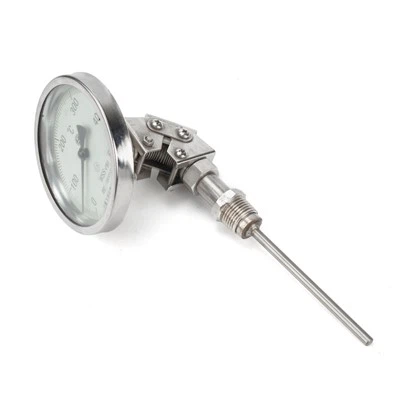
First, let’s get the basics straight for anyone who’s slept through high school physics: a thermocouple is basically two different metal wires joined at one end (that’s the “hot junction”) and open at the other (the “cold junction”). When the hot end heats up, it creates a tiny voltage—we’re talking millivolts, like super small—so we slap a meter on that open end and convert that voltage to a temperature. Simple, right? Way simpler than any smart sensor with a screen or Wi-Fi. That’s the first win for industrial automation: thermocouples are stupid reliable, even when everything else is falling apart.
Industrial automation runs on three big things: consistency, durability, and compatibility with existing systems. Let’s start with the harsh environments factories throw at these things. I’ve seen thermocouples bolted to steel furnaces hitting 2,800°F (that’s hot enough to melt most metals), buried in chemical refinery pipes pumping corrosive acids, and even sitting in ceramic kilns cycling between 100°F and 2,500°F 24/7 for years. What kills most high-tech sensors in those spots? Corrosion, vibration, extreme temps, and just plain old grime. Infrared sensors need a clear line of sight—good luck with that when a pipe’s covered in rust and gunk. Fiber optics? They break if you so much as bump them during a machine rebuild. Thermocouples? You can wrap them in stainless steel sheath, ceramic insulation, even Inconel alloy for the super hot stuff, and they’ll keep spitting that millivoltage like a champ. I had a client in a steel mill last year who tried switching to a digital temperature module that claimed “5x better accuracy” for their reheating furnaces. Six weeks later, that module fried when a chunk of molten scale splattered it. They swapped right back to our type S thermocouples—they’d been running those same probes for 12 years with zero major failures. That’s the kind of track record automation engineers love because unplanned downtime costs factories thousands per hour. No exceptions.
Next up: integration with existing automation setups. Let’s be real, most factories aren’t tearing out their entire control systems every year to install new gadgets. They have PLCs (programmable logic controllers) that are 10, 20, even 30 years old, running everything from conveyor lines to boiler controls. Guess what? Thermocouples are a universal staple. Every PLC manufacturer under the sun has input modules built specifically to read thermocouple voltage. You don’t need a fancy bridge module or a Wi-Fi gateway that takes a week to set up—just wire the two thermocouple ends to the input, calibrate it, and you’re done. I talk to so many automation techs who get frustrated with new temperature sensors that require custom code to talk to their old PLC. Thermocouples? They speak a language every control system already knows. For example, if you’re using a Siemens PLC or Allen-Bradley (two of the big boys), their standard I/O modules have thermocouple inputs built right in. No extra cost, no compatibility headaches. That’s a huge deal for facilities on a budget or with long-standing, working automation infrastructure.
Now, I know what you’re thinking: “But thermocouples are less accurate than those new digital sensors, right?” Yeah, for some super precise lab work, maybe. But in industrial automation, do you need ±0.1°F accuracy when your furnace’s temp is set to keep steel at 2,500°F? Hell no. Most industrial processes only need temperature readings within a handful of degrees, and thermocouples deliver that consistently. Even better, modern thermocouples have come a long way from the ones your grandpa used in his garage. We make them with cold junction compensation built right into their wiring, so you don’t have to manually adjust for ambient factory temps messing with the voltage. Some even have digital transmitters built right into the probe, converting that tiny millivolt signal to a 4-20mA signal or even Modbus output so you can get temp readings straight to your SCADA system. The accuracy gap is way smaller than people make it out to be for real-world factory use. I had a pharmaceutical client a while back who makes injectable drugs—they need super stable temperature for their sterilization autoclaves. They tried a digital RTD (resistance temperature detector) for a year, but when the RTD got bumped, it was off by 8°F in the autoclave, which meant they had to toss a batch of 10,000 vials. Switched to our type K thermocouples with a built-in transmitter, and they haven’t had a batch recall in three years. Accuracy isn’t just about numbers—it’s about reliability, and thermocouples deliver that.
Wait, but what about smart factories? You know, the ones with IIoT (industrial internet of things), edge computing, and all that stuff that feels like it’s straight from a sci-fi movie. Do thermocouples still fit here? Absolutely. We sell a ton of thermocouples that are pre-wired with Bluetooth or LoRa modems, so you can stream temperature data straight to a cloud dashboard without running miles of Ethernet cable. Some of them even have built-in diagnostics that tell you when the probe is corroding or about to fail, so you can swap it during a scheduled shutdown instead of a crisis. Last year, a food processing plant we work with set up a whole IIoT system for their ovens using our wireless thermocouples. They get real-time temp alerts on their phones, track which ovens are running inefficiently, and cut their energy bills by 18% in six months. Thermocouples aren’t stuck in the past—they’re adapting to modern automation, too. The old stigma of being analog and outdated? That’s garbage. We make them with all the smart features factories need, while keeping the core reliability that made them a factory staple for decades.
Of course, I’m not gonna act like thermocouples are perfect. They do have downsides. They’re not great for super low temps, like below -300°F—RTDs are way better there. And if you need pinpoint accuracy for a lab or a small process, they might not be the first pick. But for 90% of industrial automation use cases—furnaces, boilers, chemical processing, food and beverage, metal manufacturing—they’re the sweet spot of reliability, cost, and compatibility. I’ve seen so many automation projects flop because someone tried to overcomplicate things with fancy sensors that couldn’t handle the shop floor. Thermocouples work because they’re simple. When a machine is shaking, there’s dust everywhere, and you’re running 24/7, simple usually wins.
Let me tell you a quick story that drives this home. A few months back, I was on a call with an automation engineer at a power plant. He’d had a bad experience with a fiber optic temp sensor that broke in 1,100°F flue gas. He’d replaced it three times in six months, costing the plant like $8,000 in parts and downtime each time. I recommended our type N thermocouples, which are specifically made for corrosive flue gas environments. Six months later, he called me back to say it was still going strong, and the plant had saved over $30,000 in downtime already. That’s the thing about thermocouples in industrial automation: they don’t make the news for being fancy, but they make your plant run smoothly, and that’s exactly what you need.
Now, if you’re someone working in industrial automation, whether you’re setting up a new line or troubleshooting a messy old one, and you’re wondering if thermocouples are right for your process—hit us up to chat through your needs. We don’t do pushy sales tactics; we’ll tell you if a thermocouple is the best fit, or if another sensor would work better. We’ve got every type: type K for general purpose, type S for super high temps, type T for low-corrosion environments, even custom-made thermocouples for weird, hard-to-fit spots. We’ve supplied factories across all kinds of industries, and we know how to match the right thermocouple to your automation system.

At the end of the day, industrial automation is all about making processes consistent, safe, and cost-effective. Thermocouples have been doing that for over a century, and they’re not going anywhere anytime soon. They’re not the flashiest tool on the factory floor, but they’re one of the most reliable, and that’s why they still absolutely have a place in modern industrial automation.
Resistance Temperature Detector References
- Industrial Sensors and Instrumentation: Thermocouples, RTDs, and Thermistors, ISA Press, 2021
- Temperature Measurement in Industrial Automation: Best Practices for Reliability, Control Engineering, 2022
- IIoT-Enabled Thermocouples: Bridging Legacy Sensors to Modern Smart Factories, Manufacturing Engineering, 2023
- Corrosion Resistance of Thermocouple Materials for Harsh Industrial Environments, Corrosion Science, 2020
Jiangsu Zhaolong Electric Co., Ltd.
We’re well-known as one of the leading thermocouple manufacturers and suppliers in China, featured by quality products and low price. Please feel free to buy customized thermocouple made in China here from our factory. Contact us for more details.
Address: No. 80, Zhangguo Chang’an Road, Dainan Town, Xinghua City, Jiangsu Province
E-mail: 180193845@qq.com
WebSite: https://www.cnzhaolong.com/
