Hey everyone, it’s Jake from the LED Driver team here—thanks for stopping by my little corner of the web. If you’ve ever shopped for LED drivers (or even just Googled “why is my light flickering out of nowhere”) you’ve probably noticed something wild: two drivers that look almost identical on the surface can have prices that are hundreds of bucks apart. As someone who’s been selling these things for 7 years, I get it—most of the time when folks ask, they’re not just curious about math; they’re trying to figure out if they’re overpaying for a feature they’ll never use, or leaving money on the table by skipping one they actually need. Today I’m breaking down exactly how different features drive LED driver prices up (or sometimes down), no jargon, no sales fluff—just straight talk from someone who’s stood in front of a warehouse of these things way too many times. LED Drivers

First off, let’s get the basics out of the way. What even is an LED driver? I hear this all the time, so I’ll keep it simple: it’s the tiny (or not-so-tiny) box that takes the wall’s regular AC power (you know, 120V in most US homes, 240V in Europe) and cranks it down to the low DC voltage LEDs actually need. Without a driver? Your LEDs either dim to a dull flicker or blow out in a week. Now, price isn’t random—it’s tied to which boxes you need for which job, and that starts with the most basic feature: output voltage and current.
Wait, why does that matter for price? Think of it like buying a water pump. A tiny pump for a fish tank costs a few bucks, but a heavy-duty pump for a 10-acre farm is way more expensive. Same logic here: drivers have to be sized to the LED array they’re powering. If you’re powering a 10W under-cabinet strip light, you need a driver that outputs 12V DC at 0.8A. That’s a super low-power, small driver—cheap, usually $2 to $8 each, even in bulk. But if you’re powering a 500W high-bay LED for a warehouse, you need a driver that handles 48V DC at over 10A. Those are beefier components—bigger copper windings, more robust transistors, stuff that doesn’t overheat when cranking power 24/7. That same driver might run $30 to $70 each. The catch here is that drivers are only compatible with specific wattage ranges, so under-sizing is a fire hazard and over-sizing is a waste of money. I always tell folks: match the driver to your exact LED load, not a random wattage number.
Next up, output type—this is where I see a lot of people get tripped up. There are two main types: constant voltage (CV) and constant current (CC). Constant voltage is the one for under-cabinet strips, string lights, and small sign lights. It delivers a fixed voltage (12V or 24V, usually) and adjusts current to match how much the LED needs at any given time. These are simpler to design, so they’re cheaper. Constant current, on the other hand, delivers a fixed amount of current regardless of voltage, which is what you need for high-power LEDs like those in streetlights, parking garages, or billboards. Because they have to regulate current super precisely even in fluctuating temperatures or loads, CC drivers use more advanced circuitry. A CV driver might be 15% to 30% cheaper than a comparable wattage CC driver. I’ve had customers switch from CC to CV for small projects and save big, but they quickly learn the hard way that CV drivers will burn out high-power LEDs fast—so that’s not a hack to skip.
Now let’s talk about dimming—this is probably the feature that causes the biggest price gap for most customers. If you just need a driver that turns your LED on and off, that’s a no-frills, non-dimmable model. Those are usually the cheapest option in a given wattage range, perfect for basic residential fixtures, warehouse bays that are on all day, or signage that never changes brightness. But if you want dimming? There are like a dozen different dimming protocols, and each one adds cost. The two most common ones are TRIAC dimming (the standard for residential light switches) and 0-10V dimming (used in commercial spaces for building automation). TRIAC dimming is a bit more complex than non-dimmable, so it’s maybe 10% to 20% pricier. But 0-10V? That’s a whole other level. It requires extra circuitry to work with building management systems, often needs a separate control wire, and has to be calibrated to avoid flicker. A 50W non-dimmable driver might be $5, a TRIAC dimmable might be $6.50, and a 0-10V dimmable of the same wattage is $12 to $18. And if you want something even fancier, like Bluetooth or Wi-Fi dimming that works with your phone or Alexa? Add another $10 to $20 per driver. I always explain to folks: if you just need to turn lights down a little in your living room, TRIAC is enough. If you’re building an office where you want to sync lighting with your HVAC system, 0-10V is worth the extra cash, but don’t pay for Wi-Fi dimming if you never use your phone to adjust warehouse lights.
Then there’s environmental rating—and this is huge for outdoor or industrial use. Drivers aren’t built the same for every space. If it’s going inside, in a dry, temperature-controlled office or home, it’s an open-frame or enclosed driver that’s rated for indoor use. These are cheap, simple, made with cheaper plastic casings, no extra protection from water or dust. But if you’re putting it outside? Like in a streetlight, a patio light, or a sign on a building? You need an IP-rated driver. IP ratings are easy to explain: the first number is dust resistance, the second is water resistance. IP67 means dust-tight and can be submerged in up to a meter of water for 30 minutes—super common for outdoor drivers. Those have to have sealed casings, corrosion-resistant materials, and internal components that can handle extreme temps (hot sun, freezing rain, whatever). An indoor IP20 driver might be $10 for 100W, but an IP67-rated 100W driver is $25 to $40. And if you’re in a super harsh environment—like a food processing plant where there’s steam, or a mine where there’s dust? You might need an IP69K driver, which can handle high-pressure steam cleaning. Those are even pricier, $50 to $100 each for the same wattage. I’ve seen people cut corners here—trying to use an indoor driver for a patio light—and they fail in a month. It’s not worth saving $5 to have to replace a whole set of lights.
Wait, what about efficiency? I know efficiency is a buzzword, but it actually affects price. Efficiency is how much of the power the driver uses actually goes to the LEDs, versus wasted as heat. The US Energy Star has minimum efficiency requirements for drivers now, so any driver sold in the US has to meet at least a certain threshold, but some go way higher—like 95% efficiency, vs. the minimum 87%. Why does that matter for price? More efficient drivers use better components, like lower-resistance semiconductors, so they cost more upfront. But they also waste less power as heat, which means lower electric bills over time, and they run cooler, so they last longer. A basic 100W driver with 88% efficiency might be $9, a high-efficiency 94% Energy Star-rated driver is $15 to $20. For a residential user, that’s maybe an extra $6 over the life of the driver, but the electric savings add up. For a warehouse with 100 high-bay drivers, that’s $600 extra upfront, but saving like $200 a year on power, so it pays for itself in 3 years. I always tell commercial customers to calculate that payback period, not just the upfront cost.
And then there’s safety and certification. No one wants a driver that catches fire, right? So certifications like UL, CE, FCC, Energy Star, RoHS are non-negotiable in most markets. Drivers without these certifications are cheaper, but they’re untested—they might not handle voltage surges, they might fail, or even be a fire hazard. A UL-listed driver is usually 10% to 15% more expensive than an unlisted one for the same specs. I’ve had customers ask me for unlisted drivers to save a buck, and I always say no—take the hit on the budget somewhere else. A driver is the part that makes your lights work safely; cutting corners here is just asking for trouble.
Wait, what about load and surge protection? I forgot that one. Surge protection is for when the power grid spikes—like during a thunderstorm, or when a big appliance like an AC turns on. Drivers with surge protection have built-in components that absorb those spikes, so they don’t fry. Basic drivers might have 1kV surge protection, while premium ones have 6kV or even 10kV, which is way more common for industrial or outdoor areas where power lines are exposed. A driver with 6kV surge protection might be $5 more than one with 1kV. That’s a no-brainer for outdoor or commercial use—thunderstorms will ruin unprotected drivers in a year.
Let me tie this all together with a real example, because that’s what makes it click. Last quarter, I had two customers looking for 50W drivers. First was a guy redoing his basement home theater: he needed non-dimmable, indoor, IP20, UL-listed, for small LED strips. His driver ended up being $5 each in bulk. Second was a city contractor doing streetlights downtown: they needed dimmable (0-10V), IP67, surge protected for 10kV, Energy Star certified, commercial grade. Their driver was $18 each in bulk. Same wattage, totally different features, 3x the price. That’s the math, plain and simple.
I know it’s easy to see a driver on Amazon for $2 and think you’re getting a steal, but more often than not, that’s a cheap, unlisted, low-efficiency driver that will fail in 6 months. As someone who’s in the thick of this every day, I’d rather help you pick the right driver for your needs than sell you something that’s going to break. If you’re shopping for LED drivers, don’t just sort by price—ask yourself: where is this driver going? Is it indoor or outdoor? Does it need to dim? What’s the power rating of your LEDs? Do you need it to work with a building system?
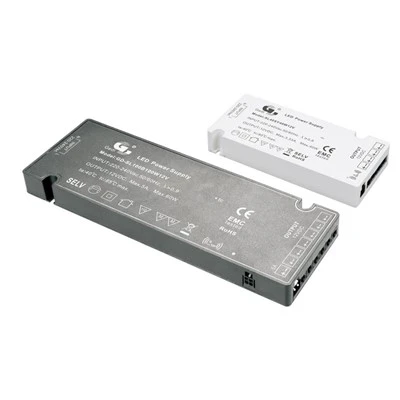
If you’re looking to buy in bulk, or you’re not sure which features you actually need, feel free to reach out. I can walk you through what’s non-negotiable for your project and what’s just a fancy add-on that’s not worth the extra cost. No pressure, no sales pitch—just someone who knows this stuff and wants to help you get the right driver for the right price.
References
Bluetooth LED Driver LED Driver Performance and Cost Drivers, Energy Star Program Requirements for LED Drivers, IP Rating System Definitions, LED Driver Efficiency Standards, North American Commercial Lighting Driver Specifications
Foshan Gedi Electrnoic Co., Ltd.
As one of the most professional LED drivers manufacturers in China, we’re featured by quality products and good price. Please rest assured to buy advanced LED drivers for sale here from our factory. If you have any enquiry about cooperation, please feel free to email us.
Address: 4th Floor, Building 8, South District, Huayi Decoration City, No.10, Laixiang Road, Shiwan Sub-district, Chancheng District, Foshan City, Guangdong Province, China.
E-mail: market@gedi-lighting.com
WebSite: https://www.gedi-lighting.com/
