If you’ve ever stepped onto a factory floor where heavy metal parts get carved, shaped, or machined into components for aerospace, automotive, or energy equipment, you’ve likely seen a horizontal milling machine at work. For as long as I’ve been supplying these machines—nearly two decades now—they’ve been the unsung backbone of precision manufacturing. But over the last five years, I’ve watched that foundation shift in ways that feel equal parts exciting and transformative. Clients used to call me to ask, “What’s the horsepower? What’s the table size?” Now they’re digging into questions about connectivity, energy use, and how the machine fits into their whole smart factory setup. That’s why I want to break down what I’m seeing as the future trends for horizontal milling machines, from where manufacturing is headed to how my business is adapting to meet those shifts. Horizontal Milling Machine
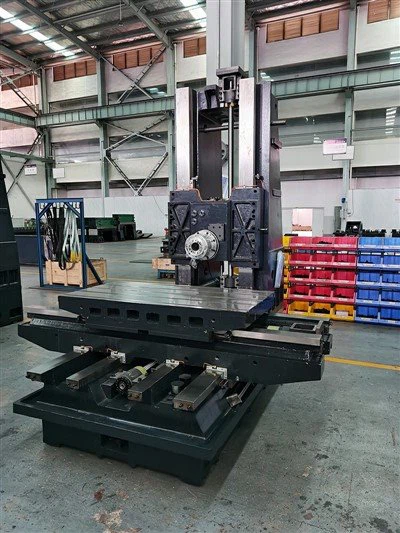
Let’s start with the core of what a horizontal milling machine does. Unlike vertical mills, where the cutting tool spins on a vertical axis, horizontal mills use a spindle mounted horizontally, allowing the tool to work on the side of a workpiece instead of just the top. That makes them perfect for deep cuts, high-volume production, and shaping large, heavy parts—think engine blocks for trucks, gear housings for wind turbines, or aluminum frames for commercial airplanes. For years, that functionality was enough: if it cut well and lasted, it sold. But now, two global forces are rewriting what customers want. First, the rise of Industry 4.0, where every machine is expected to talk to every other machine on the factory floor, share data, and adapt in real time. Second, the pressure to cut operational costs, both from rising energy prices and tight profit margins in manufacturing. These aren’t fleeting trends; they’re permanent. So let’s look at how they’re shaping the next generation of horizontal milling machines.
The first big trend is full integration into smart, connected factory ecosystems. A decade ago, a horizontal mill was a standalone workhorse. Operators would set it up, run a job, and only note issues when the machine broke down. Today, my best-selling models come standard with IIoT (Industrial Internet of Things) sensors that track everything: spindle temperature, tool wear, power consumption, and even the amount of material removed with each cut. The sensors send that data wirelessly to a central dashboard, so plant managers don’t have to walk 200 yards across the floor to check on a machine mid-production. They can get an alert two hours before a tool is going to wear out, instead of dealing with a broken spindle that stops a $50,000 production run.
I saw this play out last year with a client in the Midwest who makes agricultural tractor parts. They had a fleet of 12 horizontal mills, all from different manufacturers. The old machines would have unplanned downtime that cost them an average of 18 hours a month, leading to missed orders and $120,000 a month in lost revenue. When they upgraded to our new connected models, the sensor data let them schedule tool changes during off-shift hours, cutting unplanned downtime by 70%. That’s the kind of return on investment that makes buyers sit up and take notice. The next step here is not just collecting data, but using AI to automate decisions. Soon, horizontal mills won’t just report issues—they’ll adjust their own speed and feed rates to compensate for tool wear, or switch to a more energy-efficient cut if the power grid is at peak demand. That’s no longer science fiction; we’re testing that with beta clients right now, and it’s changed how I design the machines I supply.
Second, energy efficiency is no longer an afterthought—it’s a primary selling point. For too long, manufacturers treated milling machines as big energy hogs, and just factored that cost into their overhead. But with energy costs 30% higher than they were a decade ago, and many factories facing mandates to reduce their carbon footprints, that approach is unsustainable. Horizontal mills are especially power-intensive because they often run 24/7. The good news is, manufacturers like me have found huge gains just by reengineering basic parts. For example, switching to high-efficiency servo motors instead of traditional induction motors can cut power use by 25% for the same cutting performance. Add in variable speed drives that adjust power output based on the cut, instead of running at full power all the time, and you get even bigger savings.
I recently worked with a wind turbine component maker that runs 16 horizontal mills to shape gear hubs. They switched to our energy-optimized models, and their monthly power bill dropped by $14,000. Over a year, that’s $168,000 in savings—enough to pay off the cost of the machines in less than two years. The future here will go even further: we’re working on machines that can capture excess heat from the spindle and use it to heat the factory floor in winter, or feed unused power back into the plant’s grid. That’s a big shift from the machines I sold when I started, where energy consumption was a line item on a spec sheet that no one paid much attention to.
Third, flexibility is becoming as important as precision. For years, most horizontal mills were built for one job: a specific type of part, run in high volume. If a manufacturer needed to switch to a new part, they had to run custom tooling, spend days reconfiguring the machine, and lose production time. Today, especially in industries like aerospace, where product cycles are getting shorter and custom parts are more common, customers want machines that can handle a mix of jobs without a full retool. That means horizontal mills with modular workholding systems, quick-change tooling, and software that can adapt to new part designs on the fly.
Take the aerospace client I supply, which makes parts for both commercial jets and private planes. Two years ago, they had three separate mills for their two product lines. Now, with a flexible horizontal mill, they can switch between making a jet engine turbine blade and a small plane fuselage mount in less than an hour. That’s cut their total number of machines by 40%, freeing up floor space and reducing maintenance costs. The next wave of flexibility will include machines that can switch between horizontal and vertical machining on the same spindle, so they can handle even more types of parts without buying two separate machines. I’m already investing in that technology, because I’ve seen how much it changes the value proposition for small and medium-sized manufacturers who can’t afford a fleet of specialized machines.
Another trend that’s close to my heart is the focus on operator experience and safety, which has often been overlooked with horizontal mills. For decades, milling machine jobs were seen as grueling, high-risk work: operators standing next to loud, fast machines, handling heavy tools, and dealing with repetitive motion injuries. Today, the next generation of manufacturing workers doesn’t want that. Younger workers are drawn to roles that involve programming and managing smart machines, not standing over a lathe all day. So the machines we build now have better ergonomics: touchscreen controls instead of complex dials, enclosed spindles that reduce noise and debris, and even remote monitoring so operators can run multiple machines from a single station. Safety features are also more advanced, with sensors that stop the machine instantly if a worker gets too close to the spindle, instead of relying on hard physical guards.
I’ve watched this solve a real problem for my clients. One automotive client told me they used to struggle to find skilled operators for their horizontal mills, with a 25% turnover rate a few years ago. When they upgraded to our new, user-friendly models, turnover dropped to 8%, because the work was less physically demanding and more tech-focused. That’s a big deal for manufacturers, where training a new operator can cost $5,000 or more and take months. Building machines that attract and keep good workers isn’t just a nice bonus—it’s a business necessity.
Now, it’s not all smooth sailing. There are challenges that come with these trends. The biggest one is upskilling. Many of the factory managers I work with have been around for 20 or 30 years, used to running old-style mills manually. The smart, connected machines require new skills: how to read dashboards, analyze data, troubleshoot digital issues, and integrate the machines into their existing software systems. That’s why I don’t just sell a machine and walk away—we offer on-site training for operators and managers, and ongoing support to help them adapt. Some clients resist at first, worried that the new technology is too complicated, but after a week of training, they tell me it’s easier than the old way of doing things.
Another challenge is supply chain volatility. The parts needed to build these advanced machines—high-performance sensors, servo motors, AI-powered control systems—have been in short supply the last few years. That’s forced me to work closer with my suppliers to build long-term contracts, so I can deliver machines on time to my clients. It also means that smaller manufacturers might struggle to afford the latest models right now, but I’m working on entry-level connected horizontal mills that are more affordable, so they don’t get left behind as the industry moves forward.
Looking ahead 10 years, I think horizontal milling machines will look almost unrecognizable from what I sell today. They’ll be fully autonomous, able to run 24 hours a day with minimal human intervention, adjusting their own processes based on real-time data from the factory and even external factors like material prices or energy costs. They’ll use lightweight, high-strength materials that cut their own weight, improving precision and reducing energy use. And they’ll be integrated with digital twins—virtual replicas of the machine that let managers test new cutting processes or part designs before they even run them on the physical machine. Digital twins, in particular, are going to change everything. A client can simulate machining a new part on the twin, spot errors before they waste material, and cut test run time by 50%. I’m already using digital twins in my own design process, to test new machine models before I build a single prototype.
But through all these changes, one thing will stay the same: horizontal milling machines will still be the core of heavy-duty, high-precision manufacturing. No 3D printer or robot can replace a horizontal mill for shaping large, metal parts that need deep cuts and tight tolerances. My job as a supplier isn’t just to sell machines—it’s to help my clients stay competitive in a market that’s changing faster than ever.
If you’re a manufacturer looking to upgrade your horizontal milling setup, or you’re curious about how these trends can help your operations, I’m here to talk through your needs. Whether you run a small shop with three machines or a large factory with a hundred, I can walk you through the options that make the most sense for your budget, your workers, and your long-term goals.
Drilling and tapping center References
- Global Manufacturing Technology Association (GMTA). 2024 Industrial Machinery Market Report: Horizontal Milling Segment Trends and Projections.
- International Data Corporation (IDC). 2023 Industry 4.0 Adoption Survey: Smart Manufacturing Equipment Benchmarks.
- Energy Star. 2024 Industrial Equipment Efficiency Guidelines: Metalworking Machinery Energy Use Reduction Strategies.
- Society of Manufacturing Engineers (SME). 2022 Workforce Trends in Precision Manufacturing: Skill Requirements for Modern Milling Operations.
- McKinsey & Company. 2023 Future of Global Manufacturing: Robotics and Automation in Heavy Machining.
Smartech Machinery & Equipment Co., Ltd.
As one of the most professional horizontal milling machine machine manufacturers and suppliers in China, we also support customized service. Please rest assured to buy bulk horizontal milling machine machine made in China here from our factory. Contact us for more details.
Address: Room 2832, Changping Commercial Mansion, Shihua Road, Futian Free Trade Zone, Shenzhen, China
E-mail: smartech@smartechcnc.cn
WebSite: https://www.smartech-cnc.com/
