If you’ve ever spent time on a boat, whether it’s a weekend fishing trip, a transatlantic sail, or even just hauling gear around a marina, you know every part of your vessel matters. No component works harder—or faces harsher conditions—than the chain. When I first started my stainless steel chain supply business, every sailor and marine contractor would ask the same question: “Is stainless steel even worth the investment for my marine setup?” It’s not a simple yes or no answer, but after 12 years of fitting, testing, and supplying chains to everyone from small-boat owners to commercial fishing fleets, I’ve got the data and real-world stories to back up what works. Stainless Steel Chain

Let’s start with the enemy of every marine chain: corrosion. Saltwater isn’t just wet—it’s a corrosive cocktail of salt, minerals, and even tiny bits of debris that eat away at metal faster than rain eats at paint on a car. Traditional carbon steel chains get coated in rust almost instantly when exposed to saltwater, if you don’t coat them constantly with heavy grease or paint. That’s a huge hassle for anyone who doesn’t want to scrub down their chain every weekend before and after a trip. Stainless steel, though, has a built-in defense mechanism. The key is the alloy, specifically chromium. When chromium makes up at least 10.5% of the steel’s composition, it reacts with oxygen in water or air to form a thin, invisible layer of chromium oxide. That layer self-heals, too—if you scratch it (say, from dragging your chain over a rusty dock or a rocky anchor), oxygen from the water will reform the layer in minutes.
But not all stainless steel is created equal, and that’s where a lot of people get confused with marine use. I see it all the time: someone buys a cheap, generic stainless chain from a big-box store for $50 less, and within a season, it’s pitted. What they don’t know is that there are different grades, and only a handful are marine-grade enough to handle saltwater. The most common and reliable is 316 stainless steel. It has an extra 2-3% molybdenum added to its alloy, which is the game-changer for saltwater resistance. Molybdenum helps the chromium oxide layer stand up to chloride ions—those tiny, aggressive salt particles that sneak through even the best coating on carbon steel. The other popular grade, 304 stainless, is great for kitchen sinks, cutlery, and general outdoor use, but it can’t handle prolonged exposure to saltwater. I’ve had customers come to me with 304 chains that rusted through in six months, when they thought “stainless” meant it would last forever. That’s a critical mistake.
Now, let’s talk about the things that matter most when a chain is on a boat: strength and durability. A marine chain isn’t holding a fence or a backyard gate—it’s holding a 20,000-pound boat in place during a storm, anchoring a commercial fishing trawler that’s pulling thousands of pounds of catch, or even towing a disabled jet ski back to the marina. I hear people say “stainless steel is weaker than steel” all the time, and that’s a myth. When you compare like-for-like sizes—say, a ⅜-inch chain—316 stainless has a tensile strength comparable to high-quality carbon steel, with a few key differences that matter. Stainless steel is a bit more ductile, meaning it will flex instead of snapping suddenly under extreme load. That might sound bad, but in reality, it’s a safety feature. Carbon steel can fail with no warning under heavy stress, but a stainless chain will stretch, bend, or make noise before it breaks, giving you time to adjust or react during an emergency. The only caveat here is that not all stainless chains are made with the same quality of raw material. I source only 316 from mills that certify their alloy composition, because I’ve seen cheap 316 that’s actually diluted with other metals, making it weaker and less corrosion-resistant. For commercial use, that’s a non-starter—you can’t afford a chain that snaps mid-storm.
Another big factor for marine chains is maintenance. If you’re someone who lives on their boat, or just doesn’t have the time to scrub, grease, and repaint your chain every month, stainless steel is a no-brainer. A carbon steel marine chain requires regular care: after every saltwater use, you have to rinse it with fresh water, then coat it with a heavy marine-grade grease to prevent rust. Even then, you’ll still get minor surface corrosion if you miss a spot. With 316 stainless, the maintenance is minimal. A quick rinse with fresh water after a trip is all you need—no grease, no scrubbing, just a wipe down. That’s not just convenient; it saves you money in the long run, too. The cost of chain cleaning products, grease, and the time you’d spend doing that adds up far more than the initial premium for a good 316 chain. For boat owners who use their gear frequently, that savings pays off within a couple of years.
But stainless steel isn’t perfect, and I’d never steer a customer toward it if it wasn’t right for their specific needs. There are cases where a different type of chain works better. For example, if you’re anchoring a small dinghy that only sees freshwater (like a lake or a river), 316 stainless is overkill. A good carbon steel chain, properly maintained, will last you years for a fraction of the cost. Another case: if you’re running a very heavy commercial anchor system, some contractors will use a hybrid setup: a section of carbon steel chain (cheaper for long runs) connected to 316 stainless chain near the anchor and the boat, where corrosion and stress are highest. That balances cost and performance without sacrificing safety. Also, stainless steel is not the cheapest option upfront—if you’re on a super tight budget for a one-time use project, you have to weigh that initial cost against the lifespan. A $100 carbon steel chain might last 3 years, while a $200 stainless chain might last 15 years. So over time, stainless is more cost-effective, but the upfront price can be a barrier for some.
I’ve seen firsthand what happens when you pick the wrong chain for marine use. A few years back, I worked with a family who owned a small sailboat on the Great Lakes (salt content is lower there, but still present). They bought a 304 stainless chain because it was cheaper than 316, thinking “stainless is stainless.” Within a year, the chain had deep pits, and when they pulled it up to check, one link was so corroded it was almost broken. They were lucky they didn’t hit a storm while anchored—something that could have gone very wrong. Another client, a commercial fisherman out of the Gulf of Mexico, switched to 316 stainless chains 8 years ago, and hasn’t had to replace or repair a link since. He told me that before, he was replacing his carbon steel chains every 18 months, and spending thousands a year on cleaning and maintenance. Now, those costs are gone, and his chains are still going strong.
What about other factors, like weight? Stainless steel is slightly heavier than carbon steel of the same size, right? Wait, actually, that’s a minor difference—316 stainless has a density of around 0.29 lbs per cubic inch, while high-grade carbon steel is around 0.28 lbs per cubic inch. That’s less than a 4% difference in weight. For most boats, that’s negligible—you won’t even notice it when anchoring or storing the chain. The only time it might matter is on very small, lightweight dinghies, where every pound counts, but even then, it’s not a dealbreaker for most people.
Corrosion isn’t just surface rust, either. Pitting corrosion, which we see a lot with the wrong type of stainless or even low-quality 316, is a silent killer. Those tiny pits eat away at the chain’s strength from the inside, and you can’t see them until it’s almost too late. That’s why I emphasize certified 316, made with the right alloy. I supply chains that are tested for their corrosion resistance, with certification that confirms they meet marine industry standards, so my customers don’t have to worry about hidden damage.
Another thing to consider is compatibility with other marine parts. Stainless steel chains work well with most anchor rollers, shackles, and windlasses, as long as you match the size and strength correctly. If you’re upgrading, just make sure your windlass is rated for the size and weight of the stainless chain you’re using—most modern windlasses are, but it’s a simple check to avoid issues.
So, putting it all together: Are stainless steel chains suitable for marine applications? The answer is yes, but only if you pick the right grade, match it to your specific use case, and work with a supplier that knows the marine industry. For anyone in saltwater, commercial use, or who wants low maintenance and long-term durability, 316 stainless is the clear choice. For freshwater use or tight short-term budgets, carbon steel works if you’re willing to do the required maintenance. The biggest mistake I see is assuming all stainless steel is the same—generic 304 or cheap, uncertified 316 will leave you with a chain that fails prematurely.
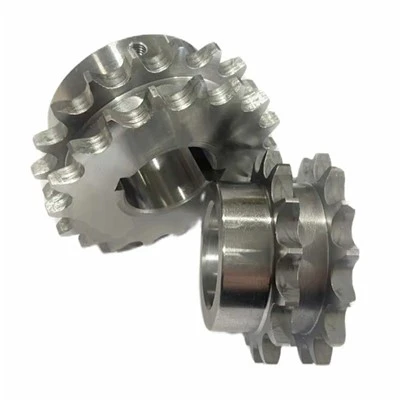
Sprocket At the end of the day, a chain is one of the most important safety components on a boat. It’s holding your home, your gear, and even your life in place when the water gets rough. I’ve spent my career making sure my customers don’t have to worry about their chains failing. If you’re not sure which type is right for your setup—whether you’re a weekend boater, a commercial contractor, or just someone replacing a worn anchor chain—I’m here to help. No confusing jargon, no pushy sales tactics, just straight talk about what works for marine conditions. Reach out for a chat about your specific needs, and I can walk you through the best options for your vessel.
References
- ASME BTH-1-2020, Design of Below-the-Hook Lifting Devices, American Society of Mechanical Engineers.
- Marine Corrosion Prevention and Control, U.S. Department of Transportation, Maritime Administration.
- Stainless Steel Grades for Marine Applications, Nickel Institute, 2022.
- Tensile Strength Properties of Marine Grade Alloys, International Association of Marine Contractors, 2021.
- Maintenance Guidelines for Mooring and Anchor Chains, American Boat and Yacht Council (ABYC) Standard H-42, 2019.
Anhui Huihuang Chain Transmission Co., Ltd.
Anhui Huihuang Chain Transmission Co., Ltd. is one of the most professional stainless steel chain manufacturers and suppliers in China, also supports high quality customized service. Please feel free to buy discount stainless steel chain made in China here from our factory. Welcome to contact us for pricelist and free sample.
Address: NO.3 YONGQIANG ROAD. JIXI.ANHUI.CHINA
E-mail: 754590660@qq.com
WebSite: https://www.hhchains.com/
