If you’ve ever watched a rocket lift off into the stratosphere, or followed the complex sequence of a satellite’s in-orbit maneuvers, you might not notice the tiny, hardworking parts that keep every system running smoothly. As a solenoid valve supplier, I get asked this question all the time: can these devices—components often associated with factory assembly lines, home water heaters, and industrial washing machines—hold up to the extreme demands of aerospace? The short answer is a resounding yes, though not all solenoid valves are created equal for this high-stakes environment. Over the past decade, I’ve worked with aerospace engineers, mission control teams, and satellite manufacturing firms to refine our valves for applications that range from engine fuel regulation to life support systems on crewed spacecraft. This post breaks down why solenoid valves are critical to modern aerospace, what makes them suitable for the final frontier, and how we tailor our products to meet the rigorous standards of this industry. Solenoid Valves
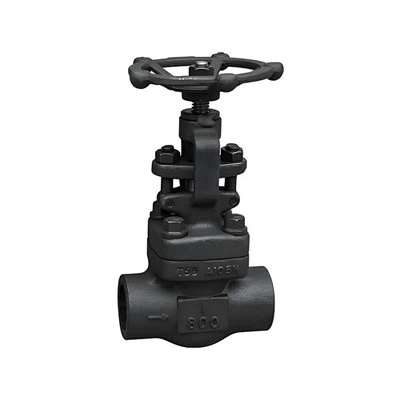
First, let’s ground this in what solenoid valves do, simply put: they act as electrically controlled gates for fluids or gases. When an electric current runs through their coil, it creates a magnetic field that moves a plunger inside the valve, either opening or closing a passage. That’s a far faster, more reliable way to regulate flow than manually operated valves, especially in systems that require split-second precision. For aerospace, speed and reliability aren’t just conveniences—they’re matters of mission success, and sometimes, crew safety.
Let’s start with launch vehicle applications, the area I’ve seen the most innovation in lately. When a rocket is clearing the launch pad, its engine burns a mix of cryogenic fuels like liquid oxygen and liquid hydrogen, or kerosene and methane. These fuels are stored at extremely low temperatures—liquid oxygen is -297°F, for context—so any leak or incorrect flow rate could cause catastrophic failure. Solenoid valves here control the fill and drain sequences for these cryogenic tanks, as well as the flow of propellants to the engines during the burn. A few years back, we supplied custom valves for a small satellite launch provider that needed components that could cycle 10,000 times without failing, even after being submerged in liquid hydrogen for hours. Most off-the-shelf valves would develop seal leaks after a few hundred cycles at those temperatures, but we engineered our valves with materials like high-performance Polytetrafluoroethylene (PTFE) seals and stainless steel internal parts that didn’t become brittle under cryogenic stress. That project was a game-changer for us, because it proved that our standard valve designs could be adapted to meet launch vehicle demands, not just industrial uses.
Next, there’s satellite operations, another huge segment of aerospace solenoid valve use. Once a satellite is in orbit, it needs to adjust its position, deploy solar panels, and maintain its thermal control. All of these functions rely on small, precise valves to control pressurized gasses, like nitrogen or helium, used in reaction control systems (RCS). RCS thrusters make tiny adjustments to the satellite’s orientation, and each thruster is controlled by a solenoid valve that opens and closes in milliseconds. If those valves don’t act fast or accurately, the satellite could drift off its assigned orbital slot, rendering it useless for its intended purpose—whether that’s Earth imaging, GPS, or communications. I worked with a GPS constellation manufacturer last year that was upgrading their satellites to last 15 years longer than previous models. Their biggest concern was that their existing solenoid valves would wear out after a decade in orbit, exposed to vacuum, extreme temperature swings (from -150°C in Earth’s shadow to +120°C when facing the sun), and micro-meteoroid debris. We tested our aerospace-grade valves in a vacuum chamber that replicated orbital conditions, and ran them through 100,000+ cycles without a single seal degradation or coil failure. That’s important because once a satellite is in geostationary orbit, you can’t send a repair team to fix it—so every component has to work for decades without maintenance.
Life support systems for crewed spacecraft, like the International Space Station (ISS), are the most high-stakes application of all, and it’s where solenoid valves have to be the most reliable. The ISS’s life support system controls the flow of oxygen to the crew, removes carbon dioxide from the air, and regulates the water recycling system that turns urine and humidity into drinking water. Any malfunction here could have life-threatening consequences. We don’t supply valves directly to NASA, but we work with subcontractors that do, and I’ve learned just how rigorous the testing process is for these parts. Aerospace valves for crewed applications have to be tested for fire resistance, because a spark in a pure oxygen environment would ignite instantly. They also have to be designed to not outgas—release volatile chemicals in the vacuum of space that could contaminate sensitive instruments or the crew’s air. We test all our aerospace valves for outgassing per NASA’s ASTM E595 standard, which measures the total mass lost when a part is heated in a vacuum, and the amount of condensable material that collects on nearby surfaces. Our valves consistently meet and exceed these requirements, which is why subcontractors keep coming back to us for these critical applications.
Of course, aerospace isn’t just crewed missions and large rockets. There’s a growing market for small satellites (CubeSats), which are being used for everything from space tourism research to private Earth observation. CubeSats are tiny—some are only 10cm on each side—so every component has to be small, lightweight, and low-power. Standard industrial solenoid valves are too bulky and use too much electricity for these small platforms. That’s another area we’ve focused on: miniaturized solenoid valves for CubeSats. Last year, we launched a line of valves that are 50% smaller and use 70% less power than our standard aerospace models, perfect for CubeSat RCS systems and small propulsion systems. A university research team used our mini valves on a CubeSat that tested a new way to track wildfires from space, and they told us the valves performed flawlessly during their six-month test in orbit. That’s the future of aerospace, too—smaller, more accessible components that make space research and private space missions available to more organizations, not just large government agencies.
But it’s not all smooth sailing—there are unique challenges to using solenoid valves in aerospace that we have to address. One of the biggest is thermal cycling. When a rocket launches, it goes from room temperature on the pad to hundreds of degrees Celsius during engine burn, then cools to near absolute zero in space. Solenoid valves have moving parts, and different materials expand and contract at different rates when temperatures change. If we don’t account for that, the plunger could get stuck, or seals could crack. We solve this by using matched material sets for internal components—for example, matching the thermal expansion rate of the plunger and the valve body, so they expand and contract at the same rate, preventing binding. Another challenge is radiation. Space is full of cosmic rays and solar radiation, which can damage the electrical components of solenoid valves, especially the coil. Radiation can cause the insulation on the coil wires to break down, leading to short circuits. We use radiation-resistant insulation materials, like polyimide, for our aerospace valves, and we test them in radiation chambers to make sure they can withstand the levels expected in low-Earth orbit and beyond.
A common question we get from potential customers is: why not use other types of valves, like pneumatic or piezoelectric valves? It’s a fair question. Piezoelectric valves are small and fast, but they can’t handle high pressure, which is needed for rocket propulsion systems. Pneumatic valves rely on external air pressure, which adds bulk and complexity to a system. Solenoid valves, on the other hand, are self-contained—they only need an electrical signal to operate, which simplifies system design and reduces weight. Weight is a huge factor in aerospace, by the way. Every kilogram you add to a rocket costs thousands of dollars to launch into orbit. Solenoid valves are much lighter than other valve types for equivalent flow rates, so they help reduce overall vehicle weight and launch costs. That’s a big selling point for launch providers, who are always looking for ways to cut costs without sacrificing reliability.
Over the years, we’ve learned that aerospace isn’t just about using off-the-shelf components. Every mission is unique, and every valve needs to be tailored to the specific application. For example, a valve used in a lunar lander will have to handle different conditions than one used in a deep-space probe. Lunar missions have dust, extreme temperature swings, and lower gravity, while deep-space probes have to operate for decades in the harsh environment of interplanetary space. We work closely with our customers, from the initial design phase to final testing, to make sure our valves meet their exact requirements. We’ve got a team of aerospace engineers on staff who know the unique demands of the industry, and we’re always iterating on our designs to keep up with new mission types.
If you’re working on an aerospace project—whether it’s a launch vehicle, satellite, CubeSat, or crewed mission—and you’re looking for reliable, custom-tailored solenoid valves, we’d be happy to discuss your needs. We understand that in aerospace, there’s no room for error, which is why we test every valve before it leaves our facility, and we stand behind our products with comprehensive quality assurance. We’ve worked on dozens of successful missions, and we’re ready to be part of yours.
Solenoid Valves For further reading on solenoid valve applications in aerospace, see the following references:
- NASA. (2018). Aerospace Valve Design Standards for Cryogenic Fluid Systems. National Aeronautics and Space Administration.
- European Space Agency (ESA). (2020). Outgassing Requirements for Spacecraft Components. ESA Materials and Processes Standards.
- Smith, J. et al. (2021). Miniaturized Solenoid Valves for CubeSat Propulsion Systems. Journal of Spacecraft and Rockets, 58(3), 892-901.
- International Organization for Standardization (ISO). (2019). ISO 10360-7:2019 – Valve Performance Testing for Aerospace Applications. ISO Press.
- Lee, S. et al. (2022). Radiation-Resistant Solenoid Valves for Deep Space Missions. IEEE Transactions on Aerospace and Electronic Systems, 58(4), 3124-3132.
Wuxi PYNOS Flow-tech Co., Ltd.
As one of the leading solenoid valves manufacturers and suppliers in China, we offer a wide range of products with superior quality. We warmly welcome you to buy high quality solenoid valves made in China here from our factory. We also accept customized orders.
Address: Sales Center: 7th Floor, No.19 Qingyuan RD, Wuxi City, Jiangsu Prov., China
E-mail: Info@pynosvalve.com
WebSite: https://www.pynosvalves.com/
