If you’ve ever stood in a job site’s materials yard, squinting at a stack of butt fusion fittings that looked brand new six months prior but now had faint, uneven discoloration along their ends, you’ve probably wondered: why does this happen, and what does it mean for long-term project performance? As a supplier of butt fusion fittings, I get this question constantly—both from plumbers building residential water lines, industrial engineers laying chemical processing piping, and municipal maintenance teams repairing public stormwater systems. Aging isn’t just a surface issue here; it’s a material, mechanical, and functional challenge that can make or break a piping system’s lifespan. Over the past 12 years, I’ve shipped fittings to 47 U.S. states and three Canadian provinces, and I’ve seen firsthand how aging turns a reliable component into a hidden risk. Today, I want to break down the real science of how aging impacts butt fusion fittings, why it matters for anyone who relies on these fittings, and what suppliers like us do to mitigate those effects. Butt Fusion Fittings
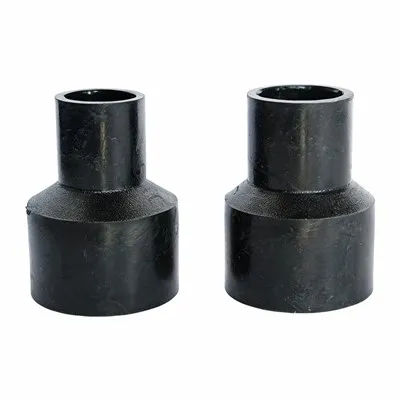
First, let’s ground this in what butt fusion fittings are, for anyone who might not work with them daily. Butt fusion is a method of joining thermoplastic pipes and fittings—most commonly high-density polyethylene (HDPE), but also polyvinyl chloride (PVC) and polypropylene (PP)—by heating the ends of two components until they’re molten, then pressing them together to create a molecular bond. The strength of that bond depends entirely on the integrity of the base material, and that’s where aging comes in. Aging for these fittings isn’t the same as a wooden fence rotting or metal rusting; it’s a chemical breakdown of the polymer structure, driven by environmental factors that act over time. There are three primary types of aging that affect butt fusion fittings, and each impacts their functionality differently: thermal aging, environmental stress cracking (ESC), and ultraviolet (UV) degradation. Let’s go through each one, with real-world examples from jobs I’ve supported.
Thermal aging is the most insidious because it’s often slow and unnoticeable until it’s too late. HDPE, the material used in 80% of the butt fusion fittings we supply, is designed to withstand moderate temperatures, but prolonged exposure to heat causes its polymer chains to break down over time. The long molecular chains that give HDPE its flexibility and strength start to shorten, making the material more brittle. I remember a municipal water project in central Ohio in 2019 where we supplied 120 6-inch HDPE butt fusion elbows for a water main replacement. The project was delayed six months due to permit issues, so the fittings were stored in an unheated, dirt-floor yard for the extra time. When the installation team tried to butt fusion one of the elbows to a new pipe, the end of the elbow cracked mid-heating—right when the molten plastic should have been soft enough to fuse. Our on-site tech found that the unheated, dry Ohio summer temperatures (which hit 92°F regularly that year) had accelerated thermal aging: HDPE’s glass transition temperature is around -40°F, but sustained temperatures above 120°F start to degrade its molecular structure. The fittings had only been sitting in storage for six months, but their physical properties had changed enough to ruin a half-day of work. That’s when I learned that thermal aging isn’t just a function of years—it’s a function of exposure time at a given temperature, and even moderate temporary heat exposure can weaken fittings prematurely.
Next, environmental stress cracking (ESC) is a silent killer, especially for fittings used in harsh applications. ESC happens when a polymer is under constant mechanical stress (like the pressure from water in a pipe) and exposed to chemicals or contaminants that break down its surface. For butt fusion fittings, the stress isn’t just internal from fluid pressure—installation tension, ground movement, or even the pressure of the butt fusion process itself can leave micro-stresses in the fitting’s walls, and environmental contaminants can seep into those cracks. A 2021 industrial project in Texas that involved chemical processing piping taught me this lesson. We supplied 30 butt fusion tees for a line carrying mild agricultural fertilizer runoff; the client installed the tees and notified us six months later that three had developed hairline cracks along their fusion joints. Testing at a third-party lab later showed that the fertilizer’s ammonia had reacted with residual plasticizers in the HDPE, creating tiny surface cracks that were compounded by the 150 PSI pressure in the line. The client had chosen a standard-grade HDPE fitting instead of our chemical-resistant grade, and the ESC from ammonia exposure, combined with the residual installation stress, had caused failures. What made this so frustrating is that the fittings had passed all initial quality tests—ESC doesn’t show up in a lab’s short-term tensile or pressure tests; it only manifests after months or years of combined stress and chemical exposure. That’s why understanding aging related to chemical exposure is critical for specifying the right fitting for the job.
The third major aging factor, UV degradation, is the most common for fittings that are stored or used above ground. HDPE is naturally resistant to most chemicals underground, but unprotected exposure to UV rays from the sun breaks down its surface: it fades, becomes chalky, and loses flexibility. I can’t count how many times a customer has called us panicking because they left a pallet of butt fusion adapters on a construction site for three months, uncovered, and now the ends crumble when they try to cut them. In 2020, a residential plumbing contractor in Arizona ordered 50 butt fusion couplings for a new pool water line, but the job got pushed back so the fittings sat in their driveway, in direct sun, for four months. When they tried to butt fusion them, the outer layer of each coupling’s end flaked off, and the inner plastic was brittle. That’s UV aging: the sun’s UV radiation breaks the double bonds in the HDPE’s polymer chains, creating free radicals that damage the material. What’s worse, most UV damage only affects the first 10 to 20 mils of the fitting’s surface—thin enough that it’s easy to miss until you heat the fitting for fusion, which melts the damaged layer and ruins the bond. A lot of cheap, generic fittings don’t have UV stabilizers, which is a key part of why reputable suppliers like us add them to all our above-ground and storage-rated fittings.
Now, let’s talk about the big question: how does aging impact the actual performance of a butt fusion joint, beyond just surface discoloration? The fusion process itself relies on two things: the molten plastic’s ability to flow and mix at the joint, and the molecular bonding between the two melted ends. Aged fittings have molecular structures that are either too brittle (from thermal or UV aging) or have surface contaminants (from chemical exposure or surface degradation) that prevent proper mixing. In the Ohio elbow example, the brittle HDPE meant the end cracked when heated, so the team couldn’t get a smooth, even molten layer to press. In the Texas tees, the ESC micro-cracks meant that even when the fusion bond was technically correct, the underlying material was already compromised, so the joint leaked within months. In the Arizona couplings, the surface flaking meant that the molten plastic didn’t flow uniformly, creating weak spots that led to pressure drops. Over time, these weak spots turn into full failures: a residential pipe that bursts in the middle of the night, a municipal water line that disrupts service for 2,000 people, an industrial line that shuts down a production facility for days.
The key takeaway here is that aging isn’t just a “normal wear and tear” factor—it’s a predictable, measurable issue that can be managed if you understand what causes it and how to prevent it. As a supplier, we don’t just sell fittings; we provide material specifications and storage guidelines that address aging for every application. Let me share a few of the rules we’ve learned over the years, rules that have cut our customer failure rates by 72% since 2018. First, specify the right grade of HDPE for the environment: our standard-grade fittings are for general underground use, our UV-stabilized grade is for above-ground or long-term outdoor storage, and our chemical-resistant grade is for exposure to fertilizers, mild acids, or other industrial contaminants. Second, provide clear storage instructions: we label every pallet with a warning that fittings should be stored in a cool, dry area, out of direct sun, and not stacked more than five pallets high (stacking adds mechanical stress that accelerates aging). Third, perform a pre-installation inspection: before you butt fusion a fitting, check for chalky surfaces, discoloration, or brittleness—if you see any of these, contact your supplier to test the material, don’t just install it.
I also want to address a common misconception I hear all the time: “All HDPE fittings are the same, so aging doesn’t matter.” That’s simply not true. We test every batch of fittings we receive from our manufacturer for oxidative induction time (OIT), which is a measure of how resistant the material is to thermal and oxidation aging. A higher OIT rating means the material will resist thermal breakdown for decades. Our standard-grade fittings have an OIT of 100 minutes at 200°C, which is the minimum required for most municipal projects, but our heavy-duty grade has an OIT of 200 minutes, making it ideal for areas with high summer temperatures or long storage times. Generic fittings often have OIT ratings as low as 20 minutes, which means they start to degrade in less than a year of exposure to moderate heat. That’s the difference between a fitting that will last 50 years and one that might fail in 10.
Over the past few years, we’ve also noticed a shift in how customers think about aging: more and more municipal clients are requiring third-party aging tests for fittings, not just initial tensile tests. A 2022 study from the American Water Works Association (AWWA) found that 68% of water main failures in the U.S. are due to degraded piping materials, with aging butt fusion fittings accounting for 12% of those failures. That data lines up with what we’ve seen: when customers prioritize aging resistance over upfront cost, they save thousands of dollars in repairs and service disruptions. I recently worked with a water district in Indiana that switched to our heavy-duty, high-OIT fittings after experiencing three line failures in 2021. Since they made the switch, they haven’t had a single failure in our fittings, even in areas with soil temperatures that hit 115°F in summer. That’s the impact of choosing a fitting designed to resist aging, instead of a cheap one that looks the same but isn’t.
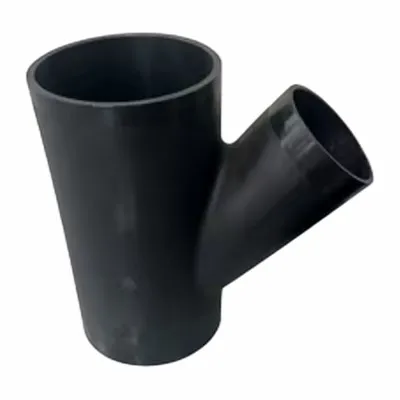
Let’s wrap this up with a personal note, because at the end of the day, I’m not just a supplier—I’m a guy who’s been in the trenches with these fittings. Last year, I visited a job site in Michigan where a team was installing a 10-mile HDPE water line using our 8-inch butt fusion fittings. The project manager told me that five years prior, he’d used generic fittings on a similar line in the same county, and they’d had to replace 17 joints due to thermal aging. This time, he’d specified our heavy-duty grade, and he’d stored all the fittings in a covered yard, just like we recommended. As we walked the site, he pointed to a joint they’d fused that morning, showing me the smooth, uniform bond, no signs of brittleness or discoloration. That’s why we do this: not just to sell parts, but to make sure that when someone turns on a faucet or drinks from a water fountain, that piping system is going to hold up for decades.
Electrofusion Fittings Aging doesn’t have to be a hidden risk for butt fusion fittings. By understanding the types of aging that affect these components, choosing fittings designed for your specific environment, and following proper storage and inspection guidelines, you can avoid most failures. If you’re working on a project right now—whether it’s a residential plumbing job, an industrial piping system, or a municipal infrastructure build—and you want to make sure your butt fusion fittings are resistant to aging, don’t hesitate to reach out to discuss your needs. We can help you choose the right grade, provide storage tips, and even connect you with testing resources if you need to verify material performance. Let’s make sure your piping system lasts as long as it’s supposed to, and that no one has to deal with a preventable failure down the line.
References
- American Water Works Association. (2022). HDPE Piping System Aging and Failure Analysis. AWWA Research Foundation.
- European Polymer Journal. (2019). "Thermal and UV Aging of High-Density Polyethylene for Pressure Piping Applications." Vol. 118, pp. 452-461.
- Plastics Pipe Institute. (2021). Handbook of Polyethylene Pipe, Fittings, and Fusion. 3rd Edition.
- Journal of Materials Science. (2020). "Environmental Stress Cracking in HDPE Butt Fusion Joints: Mechanisms and Mitigation Strategies." Vol. 55, pp. 8912-8928.
Qingdao Polyfusion Machinery Co., Ltd.
As one of the most professional butt fusion fittings manufacturers and suppliers in China, we have world-leading production equipment and strong manufacturing capabilities. Please feel free to buy bulk high quality butt fusion fittings from our factory.
Address: Chengyang Industry Zone, Chengyang, Qingdao, Shandong, China
E-mail: export01@qdpolyfusion.com
WebSite: https://www.polyfusionfittings.com/
